Who are airsight?

airsight supports airports, airlines and aviation authorities worldwide with consulting and training in airport planning, safety and operations, from obstacle assessment and flight procedure design to operational readiness. The firm received ACI EUROPE’s World Business Partner Recognition in 2026.
- Company
- airsight GmbH
- Website
- airsight.de
- Sector
- Aviation consulting and training
- Offices
- Berlin, Italy and Singapore
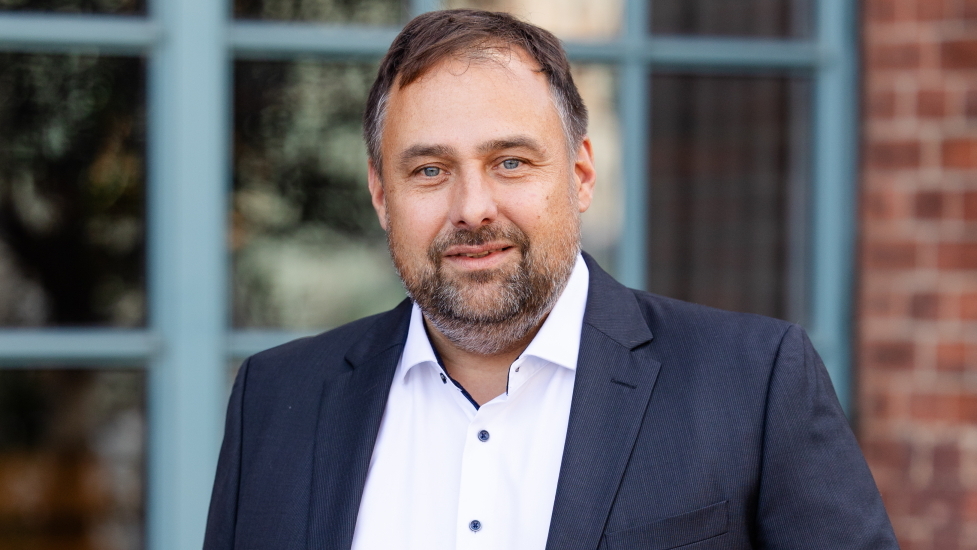
Prof Holger Schulz has spent more than 25 years on the airport safety work passengers never see. The co-founder and chief executive of airsight holds a professorship in airport planning, a PhD in aeronautical engineering and a commercial pilot licence, and he measures success by how little anyone notices it.
Ask Schulz what airsight’s very first client hired it to do, and the answer sounds like the company in miniature.
One of our earliest assignments involved supporting operational readiness and airport transfer activities in Athens. At the same time, we were already delivering specialised consulting and training in obstacle assessment and flight procedure design.
What started with very specialised technical assignments gradually evolved into a broader consulting business serving airports, airlines and aviation authorities around the world. Even today, many clients come to us for the same combination of technical depth and practical operational experience that shaped the company in its early years.
Staying useful for decades
Airport programmes outlast the people who start them, as a glance down our development tracker shows. Schulz says the consultancy’s job is to stay relevant across the whole arc.
Airports may take decades to develop, but aviation never stands still. Regulations evolve, technology changes, traffic patterns shift and new challenges emerge.
Our role is not simply to deliver a report and move on. We support clients throughout different phases of a project and help them address the challenges that arise along the way.
Success means nothing happens
Asked which piece of safety work he is proudest of, Schulz gives the answer that defines the discipline, one that boards are increasingly asked to evidence, as with ACI World’s recent runway overrun guidance.
In aviation, success means that nothing happens.
The safety achievements I am proudest of are often the ones passengers will never notice. If a runway is safer, if obstacle assessments prevent future risks, or if procedures help pilots and airports operate more safely, passengers will never see the work behind it. That invisibility is actually one of the best measures of success.
Knowing that this knowledge is being applied every day at airports around the world is something I am particularly proud of.
The classroom and the consultancy
Alongside running airsight, Schulz teaches airport planning at university, and he sees the two roles as feeding each other.
My consulting work allows me to bring real-world airport projects and practical experience into the classroom. At the same time, working with students exposes me to new perspectives, fresh ideas and challenging questions that sometimes make us reconsider established ways of thinking.
The university helps me stay intellectually curious, while consultancy ensures that the teaching remains firmly grounded in practice.
What regional airports get wrong
On growth planning at smaller airports, Schulz pushes back on the industry’s favourite comparison.
One challenge I often see is that regional airports are compared to major hub airports, even though they fulfil very different functions.
Regional airports often provide essential connectivity, economic value and public services to their regions. Their role goes far beyond profitability alone.
Successful growth planning starts with understanding the airport’s long-term role within its region rather than trying to replicate the model of a major hub.
More bureaucracy than anyone expects
The least glamorous part of the job? Schulz says the question flatters the industry.
People often imagine the visible side of the industry: airports, aircraft, international conferences and major infrastructure projects. In reality, much of the work involves detailed technical discussions, regulations, planning reviews, stakeholder coordination and, of course, bureaucracy.
But if you are genuinely passionate about aviation, even the less visible parts of the job can be rewarding because they contribute to making airports safer and more effective.
Where airsight goes next
Our ambition is to further expand our unique combination of consulting, training and specialised aviation expertise into additional regions around the world.
We also see opportunities to continue broadening our portfolio in adjacent areas. Airport master planning is one example, while training remains an equally important part of our future.
What will not change is our focus on safety, quality and practical solutions. Those principles have guided us for more than 25 years and will continue to shape the next chapter of airsight’s development.
Airside is our interview series profiling the people who run, build and supply airports. Answers have been lightly edited for punctuation only.