Airports chasing Scope 3 cuts without a capital budget for it now have a template to study in the Bristol Airport clean-tech grant model: a small, recurring grant pot aimed at the regional supply chain rather than a single flagship technology bet.
Bristol Airport has selected three projects for funding under its Aviation Carbon Transition (ACT) Programme, chosen from a record 28 applications in its 2026 round. The three projects cover low-height wind power generation, an assessment of direct air carbon capture technology, and a study of the operational requirements for hydrogen-powered aviation, according to an announcement by Regional Gateway.
Now in its fourth year, the Bristol Airport scheme has awarded hundreds of thousands of pounds to date to organisations and businesses working on emissions reduction tied to aviation and airport operations. The airport has not broken out the funding allocated to this specific 2026 round. All three winning projects target Scope 3 emissions, the category that covers aircraft operations and the journeys passengers and staff make to and from the terminal, rather than the airport’s own direct energy use.
Clare Hennessey, director of sustainability at Bristol Airport, said the scale of interest reflected the strength of the local aerospace and research base: “We received a huge number of applications to our 2026 ACT Programme, making choosing successful projects a tough decision. The projects we’re supporting are exceptional and will look to overcome some of the challenges we and the wider aviation industry face.” She added that the airport is available as a testbed for the technologies it funds, which is the detail that matters most to the applicants themselves: a route to real-world trial, not just a cheque.
Who this helps, and who it does not
This is a mechanism for the region’s aerospace SMEs and universities, not for the airport’s own balance sheet. The sums involved are modest next to the capital programmes covered elsewhere in this sector, such as VINCI Airports’ £500m pledge for Edinburgh, and Bristol is not disclosing a per-round figure. What it offers instead is a repeatable, low-cost way to keep a regional innovation cluster visible and funded, which is a cheaper reputational play than a single large sustainability capex line.
The round also lands amid wider decarbonisation activity across UK aviation, with national demonstrator funding programmes running in parallel to regional schemes like Bristol’s. Airports weighing their own hydrogen or carbon-capture ambitions should treat that combination, a small grant scheme plus national demonstrator funding, as a more useful signal than either initiative read alone.
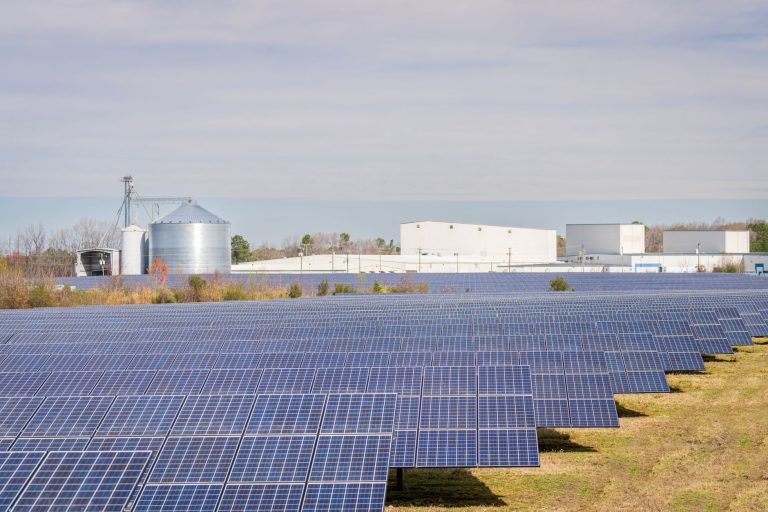
For context on where the wider decarbonisation money is actually moving, SAF supply across the EU reached 2.8% in 2025, clearing the ReFuelEU mandate, and funded demonstrators such as Aether Fuels’ ASTM SAF demo show the same pattern of small, grant-backed pilots scaling slowly. Airports exploring on-site generation to cut their own Scope 1 and 2 numbers alongside Scope 3 work can also look at London Luton’s 10.42MWp solar farm, built with no capital outlay to the airport, as a comparable no-capex model.
What to do with this
If your airport sits near an aerospace or research cluster, a small recurring innovation fund costs little and buys testbed access, applicant goodwill and a steady stream of low-risk pilot data. Check whether your region’s universities or SME aerospace suppliers already know the scheme exists before assuming the budget line is the hard part; Bristol’s 28 applications against three awards suggests demand outstrips most airports’ current funding pots by a wide margin.