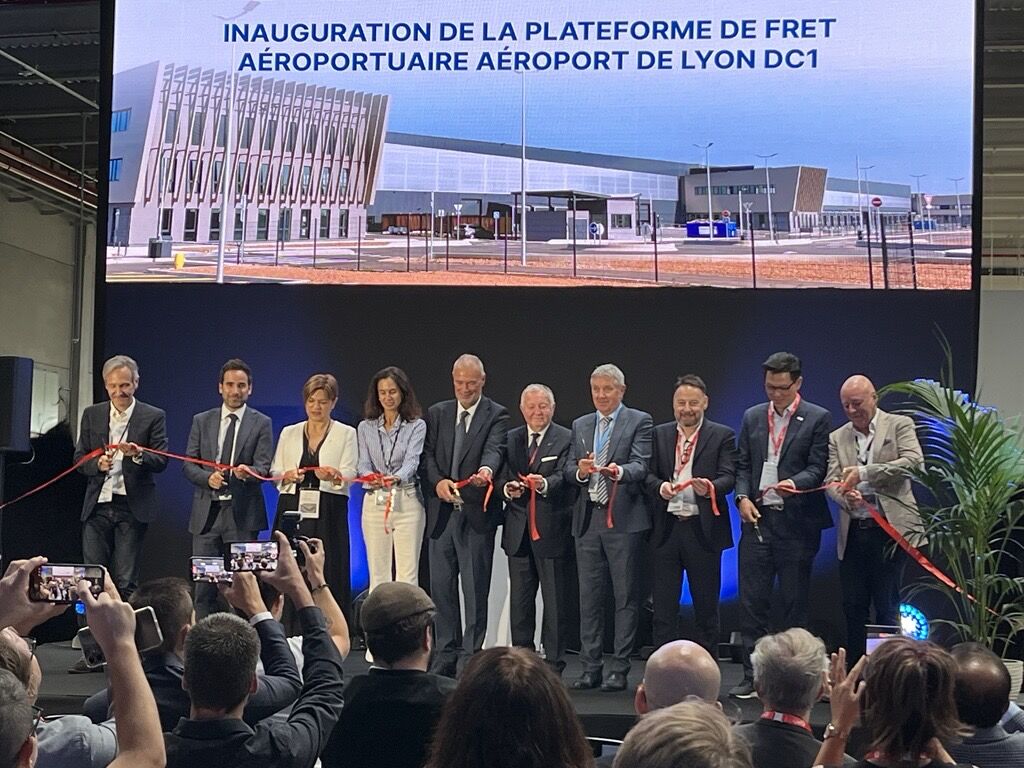
The WFS Lyon cargo terminal at Lyon-Saint Exupéry Airport (LYS) has opened as a 25,400m² facility, backing more than 300 direct and indirect jobs and giving the region’s pharmaceutical and biotech exporters a purpose-built route to the tarmac. WFS is the ground handling arm of SATS.
WFS has opened a 25,400m² cargo terminal at Lyon-Saint Exupéry Airport, consolidating its local operations and backing more than 300 jobs in the process. The facility, named Aéroport de Lyon DC1, sits in the airport’s Cargoport zone with direct runway access, and it becomes WFS’s second-largest operation in France after Paris Charles de Gaulle, serving all 380 of its customers in the Lyon area.
The building was delivered through a four-way partnership between WFS, Aéroports de Lyon, logistics real estate owner Prologis and French design-build contractor em2c Group, which held design, construction and technology oversight on the project. It includes 4,400m² of cold storage for pharmaceuticals, healthcare shipments and perishables, plus 36 door docks, five of them dedicated to air freight pallet transfers.
Laurent Bernard, Vice-President of WFS France, said the facility “strengthen[s] our capacity and operational efficiency to handle sensitive and high value goods” and reinforces Lyon’s position in national and European logistics flows, a city where WFS has operated since 1971. Prologis’s Vincent Sadé framed the project as evidence that the developer now builds infrastructure “directly integrated into our customers’ operations” rather than generic warehouse space.
The new hub is targeting a BREEAM ‘Very Good’ rating and has been built solar-ready, with a roof designed to carry a future photovoltaic array, an approach that echoes the no-capex solar model London Luton Airport has taken with its 10.42MWp solar farm. For airports weighing up cargo expansion against sustainability targets, pairing the two from the design stage, rather than retrofitting later, is the cheaper route to a credible ESG line in the capital plan.
The opening lands as ground handlers keep expanding into new geographies and cargo niches: Swissport’s recent move into Indonesia via its UNEX joint venture and LATAM Cargo Ecuador’s planned US freighter debut both point to the same pressure on handlers to add dedicated capacity rather than share general freight space. Lyon’s bet is that pharma and biotech shippers will pay for cold-chain reliability over cheaper, slower alternatives.
For other regional airports, the takeaway is specific: a single-site, cold-chain-capable cargo terminal next to the runway is now the baseline competitive offer for life-sciences freight, and the BREEAM and solar-ready design choices are becoming table stakes rather than extras on any new-build business case.
Photo: wfs.aero