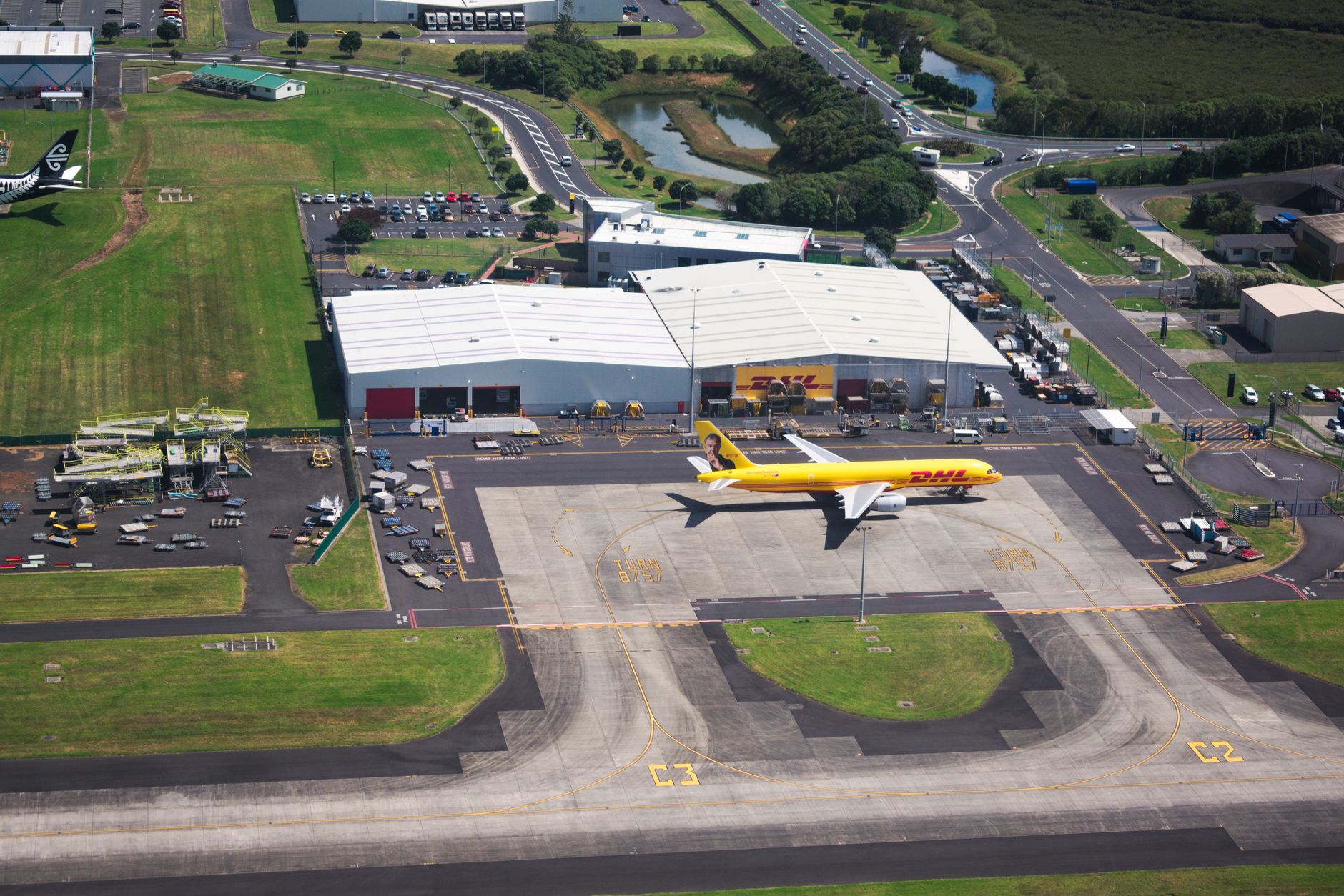
An airport business park is a defined area of land inside or adjacent to an airport’s boundary that is let, leased or sold for logistics, light industrial, office or cargo-support use, generating ground rent, capital receipts or a share of development profit that sits alongside, and at some airports now exceeds, income from landing fees and passenger charges. It is the clearest example of an airport behaving as a landowner rather than only as an infrastructure operator, and it is one of the few revenue lines a commercial director controls almost entirely in-house.
For a regional airport with surplus land and a capped or slow-growing aeronautical charge base, a business park can convert an underused field at the airport perimeter into a 25 to 125 year income stream, or into a single capital receipt large enough to fund a terminal upgrade outright. For a hub airport, it is a way to capture logistics demand created by the airport’s own cargo and passenger volumes without taking on development risk. Either way, the commercial logic is the same: land near a runway, a motorway junction or a cargo apron has value to tenants whether or not an aircraft ever uses it.
Why airports do this instead of just collecting aeronautical charges
Aeronautical revenue at UK airports is constrained by regulatory settlement where it applies, by airline negotiating power everywhere else, and by the capital cost of runway and terminal expansion, which Heathrow’s third runway timeline shows can slip by years even with a funded plan in place. Land-based revenue does not carry those constraints. A ground lease signed with a logistics tenant is a commercial negotiation between landlord and occupier, not a regulated charge, and it does not need a slot, a stand or a single extra passenger to generate income.
It also diversifies the balance sheet in a way lenders and shareholders notice. Non-aeronautical income, from retail concessions to car parking to land, is what rating agencies and infrastructure investors look at when assessing resilience to a traffic shock. London Luton Airport’s 10.42MWp solar farm, installed on airport land with no capital outlay to the airport, is a smaller-scale version of the same instinct: land that isn’t needed for aviation operations still has a yield if someone else is willing to fund and operate on it.
The four land-based revenue models
Airports monetise land in broadly four ways, and the choice determines how much risk the airport carries, how long the income lasts, and how the receipt shows up in the accounts.
| Model | How it works | Revenue profile | Who carries development risk |
|---|---|---|---|
| Long ground lease | Airport retains freehold, lets serviced plots to occupiers or developers on 99 to 150 year leases | Index-linked ground rent, paid annually, for the life of the lease | Tenant or developer funds the build |
| Joint venture development | Airport contributes land into a JV with a developer, shares build cost and profit on letting or sale | Deferred but larger: profit share on disposal or rental income net of the JV partner’s return | Shared between airport and JV partner |
| Outright freehold disposal | Airport sells land with planning consent to a developer or investor for a lump sum | One-off capital receipt, no ongoing income | Buyer takes all risk after completion |
| Build-to-suit institutional lease | Airport or its development partner builds a unit to an occupier’s specification, then lets on a 10 to 25 year full repairing and insuring lease | Higher rent per square foot than speculative stock, locked in for the lease term | Developer funds construction, de-risked by a pre-let |
Source: Airport Business Magazine analysis of published UK airport annual reports and commercial property development structures, September 2026.
A ground lease is the model most regional UK airports default to, because it keeps the freehold, avoids development debt on the airport’s own balance sheet, and produces a revenue line that an investor can underwrite for decades. A freehold disposal is attractive when an airport needs capital now, for example to part-fund a terminal project of the kind outlined in VINCI Airports’ five-year capital pledge at Edinburgh, but it gives up the long-term income permanently.
UK tax and planning facts a commercial director needs
Three UK-specific points come up on every business park deal and are worth having straight before a developer’s lawyer raises them.
- Stamp Duty Land Tax: disposals and long leases of non-residential land are charged at HMRC’s non-residential rates: 0% up to £150,000, 2% on the portion between £150,001 and £250,000, and 5% above £250,000. These bands apply to the premium and, for leases, there is a separate calculation on the net present value of the rent.
- Structures and Buildings Allowance: a developer or occupier constructing a new industrial or logistics building can claim capital allowances at 3% per year on a straight-line basis, which affects the rent a tenant can afford to pay and is routinely factored into build-to-suit negotiations.
- Use class: under the Town and Country Planning (Use Classes) Order, most airport business park buildings fall under Class B2 (general industrial), Class B8 (storage and distribution) or the more flexible Class E, and the class granted at planning stage constrains which occupiers a development can be marketed to without a further planning application.
Business rates are payable on the completed buildings once occupied, calculated against the Valuation Office Agency’s rateable value and the relevant multiplier, and are a cost the tenant underwrites, not the airport, under a standard full repairing and insuring lease.
Who actually builds and runs these sites
Few UK airports have the balance sheet or the in-house expertise to develop logistics and industrial space themselves, so almost every live business park is a joint venture or a direct letting to a specialist developer. The shortlist a commercial director would actually work from looks like this.
| Developer | Known for | Typical role on airport land |
|---|---|---|
| SEGRO | Big-box logistics and urban warehousing across the UK and Europe | Long-term own-and-let landlord, often the JV partner of choice for strategic rail and road-connected sites |
| Prologis | Global logistics real estate with a large UK distribution portfolio | Own-and-let developer on motorway and airport-corridor land |
| Goodman Group | International logistics and industrial investor-developer | Fund-backed JV development, typically at scale |
| IM Properties | Midlands-focused industrial, logistics and strategic land developer | Direct development and land promotion around Midlands airport sites |
| Roxhill Developments | Specialist strategic land promoter for rail freight interchange and logistics schemes | Land promotion and master planning, often partnered with an institutional developer |
| Panattoni | Speculative and build-to-suit logistics development | Build-to-suit units let on pre-agreed institutional leases |
| Chancerygate | Smaller-unit, multi-let urban industrial development | Multi-let schemes suited to SME occupiers rather than single large-format sheds |
| Clowes Developments | Family-owned strategic land promotion, East Midlands specialism | Early-stage land promotion ahead of planning consent |
Source: company websites and published UK logistics and industrial property coverage, compiled September 2026.
The split matters because the right partner depends on the site, not the airport’s size. A 5 hectare parcel suited to SME multi-let units needs a developer like Chancerygate, not a global logistics fund looking for a single 50,000 sq m shed. An airport with land but no planning consent yet is better served starting with a strategic land specialist such as Roxhill or Clowes before approaching a build-to-suit developer.
How this compares with other non-aeronautical income
Land-based revenue is lower margin per transaction than retail concessions but far less exposed to passenger mix. WHSmith’s airport profit falling to £75m in FY26 on a changed airport traffic mix is a reminder that concession income rises and falls with footfall and spend per head. A ground lease signed with a logistics tenant does not move with passenger numbers at all, which is exactly why it appeals to an airport finance director trying to smooth earnings through a slow traffic year.
FAQ
Does an airport need CAA permission to develop a business park?
Economic regulation by the Civil Aviation Authority applies to aeronautical charges, not to an airport’s commercial land dealings, so a ground lease or land sale is a normal commercial property transaction subject to planning permission from the local authority rather than CAA approval. Airports still need to check any safeguarding restrictions tied to flight paths, obstacle limitation surfaces or noise, which can constrain building height and use on land close to the runway.
How is land-based revenue different from aeronautical revenue?
Aeronautical revenue, landing fees, passenger charges and aircraft parking, is tied directly to traffic volumes and, at larger UK airports, to a regulatory settlement. Land-based revenue is a property transaction: a ground rent, a lease premium or a capital receipt that is contractually fixed for its term regardless of how many aircraft movements the airport handles that year.
What business rates apply to an airport business park?
Once a building on the park is occupied, business rates are payable by the occupier based on the rateable value set by the Valuation Office Agency and the multiplier set annually by central government, with small business rates relief available to qualifying occupiers below the relevant rateable value threshold. The airport, as freeholder under most lease structures, does not pay the rates on let buildings.
Can a smaller regional airport build a business park, or is it only for the hubs?
Scale matters less than access: a site with a motorway junction, rail connection or dual carriageway frontage within a few minutes of the airport boundary is commercially viable regardless of the airport’s passenger numbers, which is why strategic land promoters and multi-let developers actively target regional airport land rather than only the hub estates.
What return should an airport expect from a ground lease versus a freehold sale?
A freehold sale delivers the largest single cash figure but ends the airport’s interest in the land permanently, while a ground lease produces a smaller annual sum, usually index-linked, that continues for the length of the lease, often 99 years or more. Which is better depends entirely on whether the airport needs capital now for a specific project or wants a durable income line on the balance sheet.
What to do next
- Get an up to date safeguarding map from your planning or airfield operations team before marketing any parcel, so flight path and obstacle limitation constraints are known before a developer is engaged.
- Commission a land promotion appraisal from a strategic land specialist such as Roxhill Developments or Clowes Developments if the site does not yet have planning consent, rather than approaching an institutional developer first.
- Model the ground lease versus freehold sale decision against your current capital programme: a scheduled terminal or runway project is usually the trigger for choosing a lump sum over a long-term rent.
- Benchmark proposed rents and lease terms against at least two developers from different tiers, a national logistics developer and a smaller multi-let specialist, before signing an exclusivity agreement.