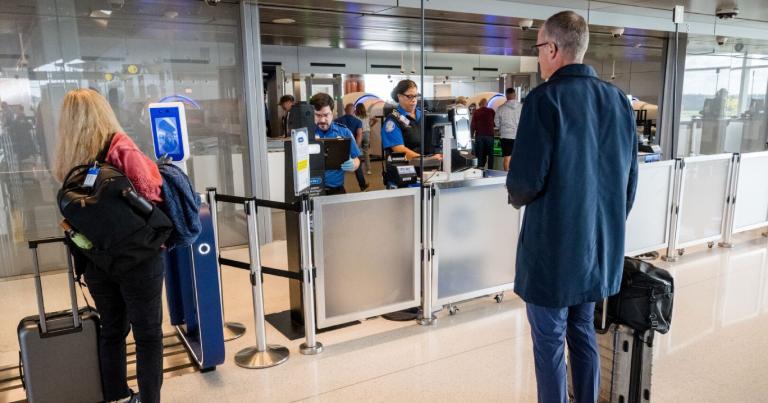
Airports betting on biometric boarding and border processing now have a direct stake in a Brussels policy fight. Five of the sector’s biggest names have formed a coalition to stop the EU’s incoming Digital Omnibus from restricting the voluntary biometric journeys many terminals have already built capital programmes around.
Idemia Public Security, together with IATA, ACI EUROPE, Amadeus and SITA, announced the Responsible Biometrics Travel Industry Coalition on 1 October 2026, calling on EU policymakers to keep voluntary biometric use intact under the new rulebook. The five founding members published a joint manifesto, Advancing Responsible Biometrics in Europe, setting out what they want the legislation to preserve and what they say is at risk if it does not.
The Digital Omnibus is the European Commission’s effort to simplify the bloc’s digital rules, cut compliance costs and keep data protection standards intact. The coalition’s concern is narrower and commercially pointed: as currently drafted, the proposal could place unintended restrictions on the voluntary use of biometrics by passengers, according to the group. That matters directly to any airport that has invested in biometric e-gates or single-token journeys, including the kind of expanded processing capacity Brisbane Airport brought in before its holiday peak.
The coalition’s core argument is operational, not just legal. Biometric verification cuts repeated manual document checks, lifts throughput and lets airports squeeze more capacity out of terminal infrastructure they already own rather than building new halls. It also frees staff to focus on passengers who need extra help during peak periods, a resourcing problem every airport running a security or border upgrade is already working through, as seen in Ontario Airport’s private 5G security network with Boldyn Networks.
The coalition is asking for technology-neutral rules that allow voluntary biometric use with safeguards in place, alongside a guaranteed non-biometric alternative for passengers who opt out. It wants passengers able to choose whether to share data, and to request deletion at any time, with use limited to a single defined journey. The group cites IATA’s Global Passenger Survey finding that 74% of travellers surveyed were willing to share biometric data in place of showing a passport or boarding pass, meaning 26% were not, a split that underlines why the manifesto insists on keeping a manual alternative rather than making biometrics mandatory.
The capacity argument behind the push is ICAO‘s forecast of 12.4 billion annual passengers globally by 2050, pressure the industry has flagged repeatedly, including in ACI World’s call for governments to plan capacity against a $4 trillion cost estimate and in its count of a record 9.8 billion passengers carried in 2025. More than a billion of those journeys a year already pass through European airports, which is the scale the coalition says a clear, stable biometric framework needs to serve.
For airport operators, this is a watch-and-wait story rather than an immediate procurement one. No airport’s e-gate contract changes today, but the EU’s final text on the Digital Omnibus will set the regulatory floor for every biometric boarding and border system bought in Europe from here on. Commercial and security directors running or planning biometric programmes should track the Omnibus timeline directly through Idemia‘s announcement and the coalition’s manifesto before signing contracts that assume today’s rules will still apply at go-live.