HID says first-attempt facial verification, not lab accuracy, is “the real test of whether a biometric investment delivers operational value”, with its US e-gate deployments now processing up to 50,000 extra passengers a day compared with manual checks.
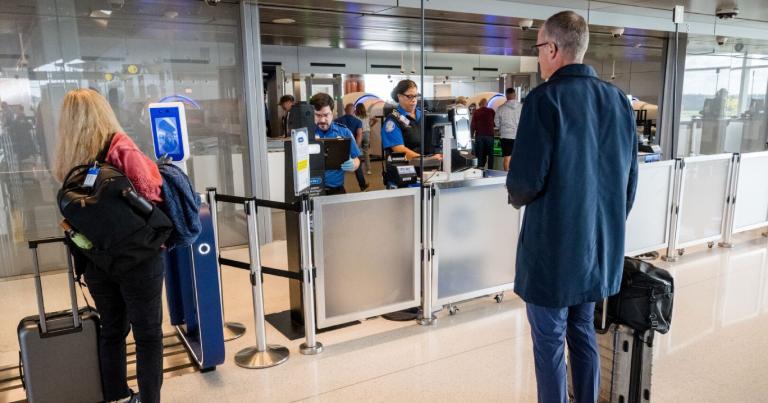
HID, the identity technology supplier, made the case in a 14 October 2026 briefing that argues airports are testing biometric vendors on the wrong metric. The company said a fleet of its biometric e-gates deployed at major US airports has delivered verification up to five times faster than manual processing, alongside measurable gains in staffing and satisfaction scores, though it did not name the specific airports in scope.
| Metric | Reported outcome |
|---|---|
| Verification speed vs manual processing | Up to 5x faster |
| Additional passenger throughput | Up to 50,000 travellers a day |
| Labour efficiency gain | Up to 25% |
| Traveller satisfaction score | +14 points |
Source: HID, 14 October 2026, figures attributed to a fleet of biometric e-gates at major US airports, no specific sites named.
HID’s argument rests on a single anecdote: a British traveller at Denpasar airport in Bali was rejected five times across three gates because the system kept matching his passport photo against the David Bowie face printed on his t-shirt, rather than his own. The story is lighthearted, but the operational consequence is not. HID’s piece sets out what it calls an “operational ripple effect”: a failed match triggers a second attempt, then a third, then manual review, with queues, staffing costs and passenger frustration building from there, at a scale where even a small first-attempt failure rate compounds across tens of thousands of daily travellers.
For airport operators, this reframes the vendor conversation. Lab accuracy claims are easy to produce and easy to market. First-attempt success in a live terminal, across variable lighting, mixed demographics, fluctuating queues and deliberate spoofing attempts, is harder to prove and the figure HID says should actually drive procurement decisions. That puts pressure on every biometrics supplier an airport might shortlist to publish live-deployment numbers rather than controlled test results.
HID is one name on that shortlist, but not the only one. IDEMIA, which recently built on 3,000 units with its MFACE Gen2 face scanner and is leading a five-firm push on EU biometric rules with IATA, sits alongside SITA as one of the established players airports already shortlist. Smaller specialists are worth the same scrutiny: Vision-Box, the Portuguese biometric border and e-gate specialist, and Veridos, the German identity document and verification provider, both compete for the same checkpoint contracts without the brand recognition of the bigger names.
The stakes are rising because the margin for error is shrinking. Europe’s entry/exit system has already shown how border biometrics strain under volume, with ACI Europe warning that EES delays will persist beyond the first year, and US checkpoints face comparable pressure, illustrated by the capped daily volumes of schemes like TSA’s Gateside Pass at Syracuse. Any airport weighing a biometric upgrade is effectively weighing throughput against failure cost, not accuracy scores against each other.
The practical takeaway: before signing a biometric contract, ask the vendor for first-attempt success rates from live deployments, not lab testing, broken down by lighting condition and passenger demographic, and ask where image processing happens and how presentation attack detection is certified. A gate that photographs well in a demo but fails at the checkpoint is a staffing cost, not a solution.
Source: HID, 14 October 2026 briefing.