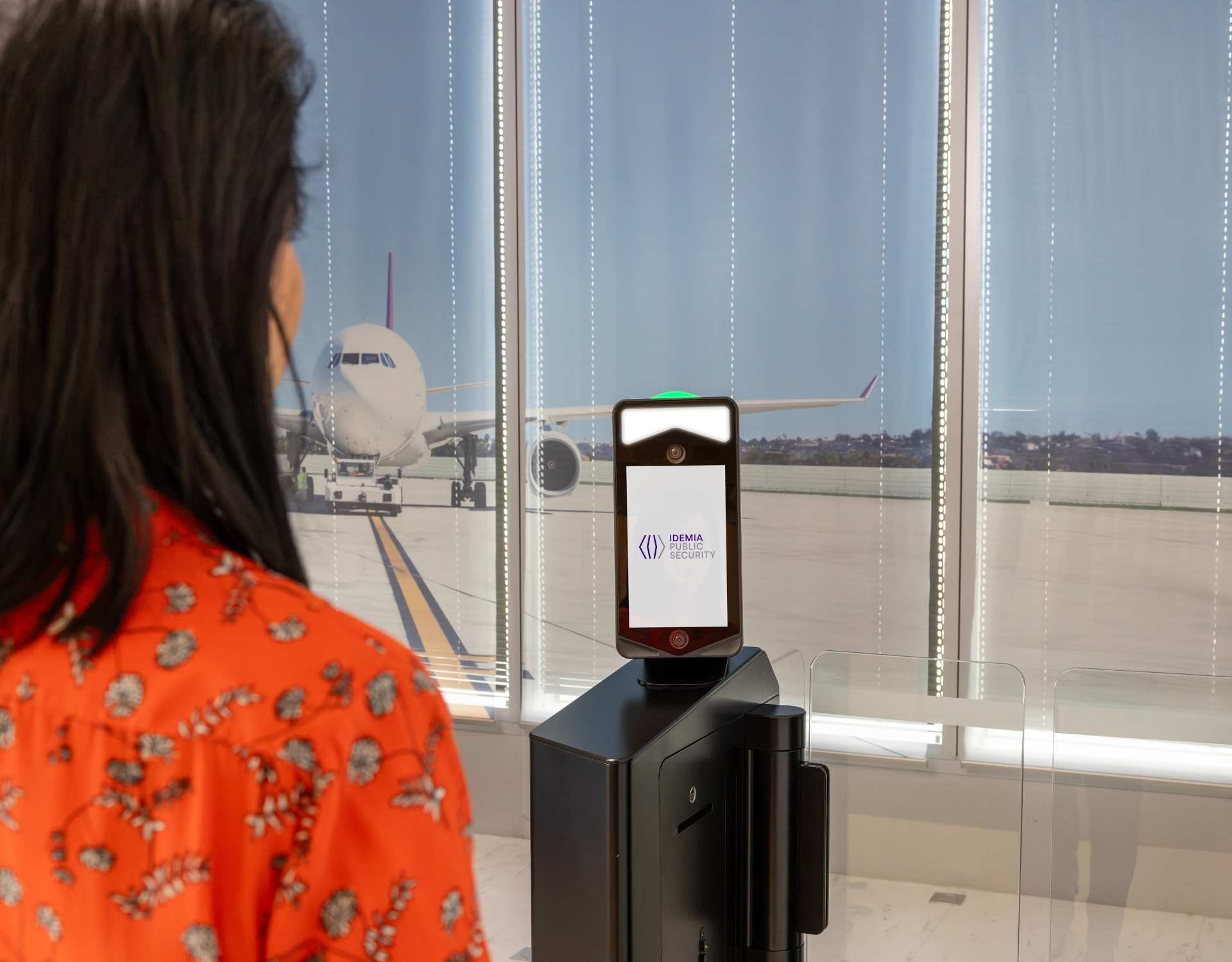
Idemia Public Security has launched MFACE Gen2, a facial recognition device for border and airport checkpoints that adds live 3D multi-face tracking to a product line already installed in more than 3,000 units worldwide. The announcement gives procurement teams a concrete upgrade path rather than a new platform to evaluate from scratch.
The device sits at the checkpoint itself, pairing AI-powered facial matching with built-in presentation attack detection and encrypted communications, and holds no biometric data locally. Idemia says the unit is designed to run on existing network architecture with minimal infrastructure change, which keeps deployment cost down against a full checkpoint rebuild. No unit price or rollout date was given in the announcement, made on 8 October 2026 from the company’s Courbevoie headquarters.
Why it matters to airport operators
Gen2 is pitched at a specific operational pain point: queue management across a wide range of travellers, including families moving together, passengers with reduced mobility, and anyone wearing glasses or a face mask. For a head of passenger experience, that is the metric that matters more than the underlying AI model, because it is throughput variance, not peak-condition speed, that drives queue length at a live gate.
Tim Ferris, Idemia’s global head of travel and transport, said the device was built to deliver “fast, accurate, and intuitive identity verification that reduces friction for travelers while supporting secure, seamless passenger processing.” Derek Tan, the division’s chief product officer, said customers had specifically asked for faster capture and higher biometric quality, which is the kind of incremental spec upgrade airports should expect vendors to keep shipping on this hardware generation rather than wait for.
Where this sits in the procurement landscape
Airports weighing a biometric refresh are not short of options. Idemia competes directly with NEC, Thales and SITA at the large-scale end of border and gate biometrics, and with smaller specialists such as Vision-Box, now under Amadeus, and Veridos, which focuses on government-grade identity hardware. None of these have announced a directly comparable hardware refresh this month, which gives Idemia a timing advantage with buyers mid-tender.
That competitive backdrop matters because the EU’s own biometric framework is still being shaped by vendor input: Idemia already sits on the coalition pushing IATA-backed EU biometric rules, which gives it visibility into procurement standards before competitors see them. Operators running smaller biometric pilots, such as the capped rollout behind TSA’s Gateside Pass at Syracuse, will want to check whether a Gen2 refresh changes daily throughput limits before committing to a wider rollout.
The wider screening market has also been consolidating, as shown by Leidos and Altaris uniting two screening units as Analogic, so airports evaluating Gen2 should factor supplier stability into any multi-year service contract, not just the unit spec sheet.
What to do next
Airports already running MFACE hardware should ask Idemia directly what a Gen2 upgrade costs against a full unit replacement, since the announcement gives no pricing. Those starting from scratch should put Gen2 alongside NEC, Thales and Vision-Box on the same shortlist and request throughput data for mixed traveller profiles, not just best-case capture speed, before signing.
Photo: idemia.com