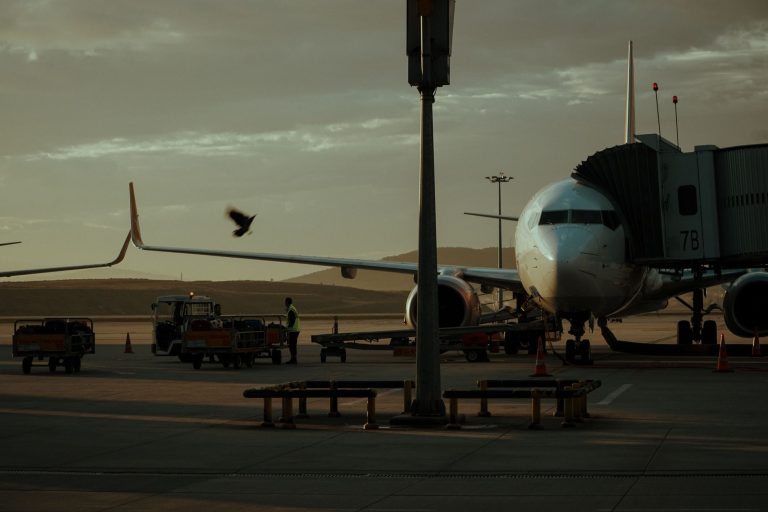
Nuremberg airport closed to all traffic for more than an hour on Tuesday after a routine arrival from Corfu became an international incident when a corrupted radio signal told air traffic control that a Corendon Airlines Boeing 737 had been hijacked, triggering two Eurofighter jets, a SWAT deployment and a full ground stop.
Nuremberg airport closed after the Boeing 737, flying from the Greek island of Corfu, transmitted squawk code 7500, the international distress signal for a possible hijacking, while the pilot could no longer be reached by radio, The Sun reports. Corendon Airlines told CNN the alert was sent “while in Croatian airspace due to a brief malfunction in the radio communication system,” and that “the situation was immediately monitored, investigations were promptly initiated and all necessary preparations were made,” according to CNN. Flightradar24 data cited by The Sun put touchdown at 12.16pm local time, with the aircraft escorted in by two Eurofighter jets.
Why it matters to the people who run airports
For a chief executive or operations director, the number that matters here is not the radio fault, it is what a false distress code does to the rest of the network in real time. Several flights scheduled to land in Nuremberg were diverted to Frankfurt, Memmingen, Stuttgart or Munich while the airport was sealed off, according to Bild as reported by the Daily Express. That is a full airside shutdown, a police cordon, a Special Deployment Commando mobilisation and a knock-on diversion bill landed on at least four other German airports, all triggered by a radio malfunction rather than an actual threat.
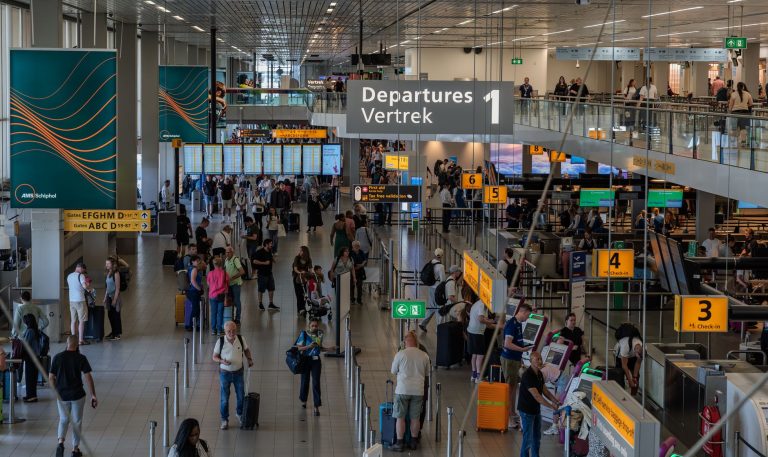
Nuremberg is not a marginal facility. It was Germany’s fifth-busiest airport in August, handling nearly 550,000 passengers that month, according to the Working Group of German Airports (ADV), as cited by the Daily Express. A closure of this kind at an airport of that throughput is a commercial director’s worst mid-shift call: retail and F&B revenue halted, slot schedules disrupted, and ground handlers and airlines absorbing recovery costs with no warning.
Police said “we received a report of an unclear air emergency. In the meantime, the aircraft has landed safely in Nuremberg. Investigations into the cause are currently underway,” and later confirmed “on-site inspections have determined that there is no danger,” the Express and CNN both report. The episode sits alongside a separate, unrelated drone sighting at the same airport overnight, when three pilots independently reported an object during takeoff or landing between 2am and 4am; police told CNN the two incidents were not connected.
What to do now
The lesson for heads of security and operations is not about squawk codes, it is about how fast an airport’s emergency protocol escalates from a cockpit transmission to a full ground stop, and how quickly it can be stood down once the aircraft is verified safe. Airports that have recently had to run their own real-time emergency response, from the Emirates A380 diversion to Frankfurt after an inflight medical emergency to the BA295 turnback to Heathrow after a 28,000ft altitude drop, show the same pattern: the cost is concentrated in the first hour, in diversions, cordons and passenger handling, long before any investigation finds a cause.
That makes resilient, redundant communications infrastructure a procurement priority, not a compliance line item. Airports reviewing their own radio and data resilience have options worth shortlisting beyond the legacy radio vendors, including private network specialists such as Boldyn Networks, which Ontario International Airport recently selected for a private 5G security network, as covered here. Reliable ground-to-air and interagency communication is exactly the layer that failed, by Corendon Airlines’ own account, in Nuremberg on Tuesday.
Safety and operations teams should also treat this as a reminder that the systems nobody notices until they fail are the ones worth auditing first, a point made directly in Airside with Holger Schulz on safety work nobody notices. A radio malfunction over Croatian airspace closed a German airport handling half a million passengers a month within the hour. The fix is cheaper before the next false alert than after it.
Why was Nuremberg airport closed?
An incoming Corendon Airlines flight from Corfu transmitted squawk code 7500, the international hijack distress signal, after what the airline described to CNN as “a brief malfunction in the radio communication system.” Police closed the airport, scrambled two Eurofighter jets to escort the aircraft, and deployed Germany’s Special Deployment Commando before confirming on-site inspections found no danger, per The Sun.
Was the Nuremberg closure linked to the overnight drone sighting?
No. Police told CNN the hijack-code incident was not related to the earlier drone sighting, in which three pilots independently reported an object near the airfield between 2am and 4am on the same day.
Did flights resume at Nuremberg airport?
Yes. Flight operations returned to normal after the aircraft landed safely and police completed their on-site checks, Reuters reported, as cited by CNN.
The takeaway: a single radio malfunction turned a routine Corfu arrival into a full ground stop, a multi-airport diversion event and a SWAT deployment, and the fix sits in communications redundancy, not in blaming the cockpit.