By Staff Reporter
SITA has launched Border Flow Lane, a border-processing system that verifies travellers before they depart rather than at the immigration desk, with the company saying more than 75% of travellers can be cleared pre-departure under the model, according to Regional Gateway.
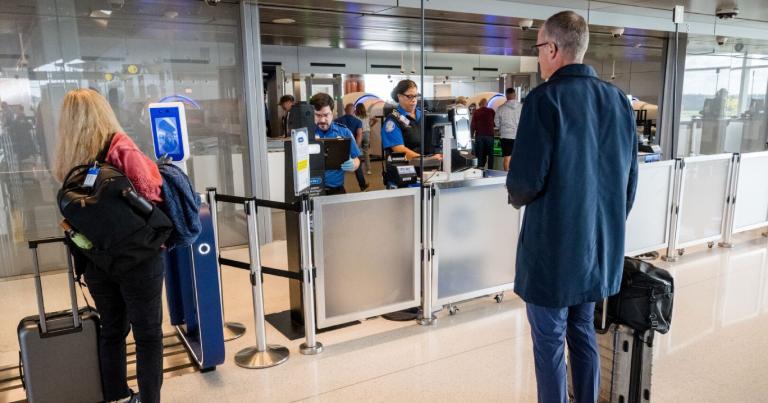
SITA has launched Border Flow Lane, a border-processing system that verifies travellers before they depart rather than at the immigration desk, with more than 75% of travellers cleared pre-departure under the model. The system checks identity before boarding and again on arrival, letting cleared travellers walk through the immigration hall without stopping at a gate, kiosk or officer checkpoint. SITA says it can process travellers up to eight times faster than a conventional eGate, though no launch date or airport rollout has been named.
For an airport, the pitch is capacity without construction. Every traveller who does not stop at a desk frees that space for the next arrival, which SITA frames as adding throughput to an existing immigration hall rather than building a bigger one. That is the same argument behind the biometric preclearance work already running at Bermuda’s CBP preclearance site and the identity document acceptance spreading through 21 US states via mobile driver’s licences: push the decision earlier in the journey and the physical checkpoint becomes the exception rather than the default.
Pedro Alves, SITA’s senior vice president of borders, put the case for skipping new terminal capital plainly: “The aviation industry cannot build its way out of every capacity challenge. Traveller demand changes constantly, but airport infrastructure doesn’t.” His argument is that stopping becomes the exception, not the rule, once enough information is available before a traveller boards.
SITA says travellers opt in and use authorised biometric data, with border agencies retaining control over identity verification and decision-making, and the company says throughput rises without compromising security, privacy or government oversight. Those assurances matter to a buyer, given that cybersecurity now ranks as the top concern among airport executives in ACI-NA’s AirportNEXT study of 320 operators. Any system that centralises pre-departure identity data will draw the same scrutiny that agentic AI pilots at CVG and Munich are already facing, where the warning was against adopting new systems as “tech tourism” rather than for a measured operational gain.
No pricing, pilot airport or contracted government has been disclosed, and Regional Gateway’s report carries none. That leaves the commercial case unproven until an airport or border authority confirms a live deployment.
What to do about it
Border directors evaluating immigration hall capacity should treat Border Flow Lane as a procurement question for SITA directly rather than a finished product: ask which government or airport is running it live, what the opt-in rate looks like in practice, and what happens to the 25% of travellers who are not pre-cleared under the model. Until a named airport confirms deployment and cost, budget this as a watch item, not a line item.