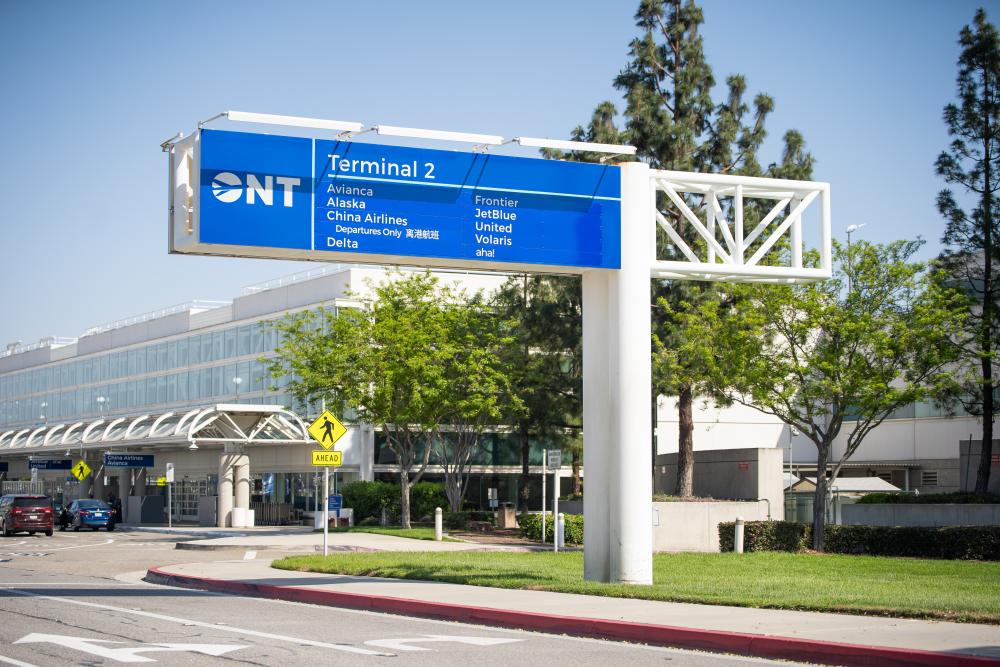
Ontario International Airport has selected Boldyn Networks to design, build and operate a private wireless network covering its full 1,700-acre footprint. The California airport, which handles more than 7 million passengers a year, will use the dedicated 4G/5G network to run perimeter intrusion detection and expanded camera coverage as it scales security infrastructure to match traffic growth.
The network combines 4G/5G access with on-premise edge compute and centralised private cloud management, monitored through Boldyn’s 24/7 network operations centre and security operations centre. It is being built as a segmented architecture with dedicated spectrum and enterprise-level controls, giving ONT its own infrastructure rather than relying on public networks for mission-critical operations. The airport describes itself as Southern California’s fastest-growing over the past decade.
Initial deployment is focused on physical security and perimeter intrusion detection, before expanding to wider camera coverage across the site. Boldyn says the network has been designed as “future-ready”, built to support further operational use cases without needing significant infrastructure rework as passenger and cargo volumes keep rising.
Chuck Miwa, senior vice president and chief information officer for the Ontario International Airport Authority, said: “Investing in a private wireless network gives Ontario International Airport the operational autonomy necessary to manage and secure our more than 1,700-acre footprint with precision.”
Jason Caliento, chief commercial officer, US, for Boldyn Networks, said the company is applying its experience supporting passenger journeys at major transit hubs to design a network suited to the demands of a large, complex US cargo and passenger hub.
The deployment sits within a wider pattern of airports treating connectivity as core security infrastructure rather than a passenger amenity, a theme covered in ACI-NA‘s AirportNEXT study ranking cybersecurity top of 55 trends. It also follows other operators consolidating operational data onto single platforms, as seen with Montréal-Trudeau’s deployment of the Veovo airport operations platform and with airfield monitoring investments such as the UK airport’s 120km pavement scanning programme with XenomatiX.
For airports weighing similar investment, the practical question is scope: whether a private network is procured purely for perimeter security or specified from the outset to carry future operational and passenger-facing applications, since retrofitting later is the costlier route.