Boston Logan International Airport has deployed Amelia, a life-size AI avatar concierge that speaks up to 40 languages and gives passengers real-time TSA wait times and turn-by-turn directions through the terminal. The Massachusetts Port Authority (Massport) built the pilot with Proto Hologram and Holomedia AI, and Proto Hologram’s founder David Nussbaum said the technology “still feel[s] like science fiction to most people” even though it is ready to deploy now.
Amelia is a self-contained, touch-screen unit with no external hardware, sitting in the terminal to guide travellers to gates, restaurants, shops, lounges and baggage claim on demand, day or night. Massport and its partners describe Boston Logan as the biggest airport to run the service so far, and the installation is also Proto Hologram’s first major deployment in the Boston area, following prior use of its platform in healthcare, education, finance, retail, sport and entertainment. Neither Massport nor its vendors disclosed a cost for the pilot, according to Future Travel Experience, which first reported the launch.
What Amelia actually does
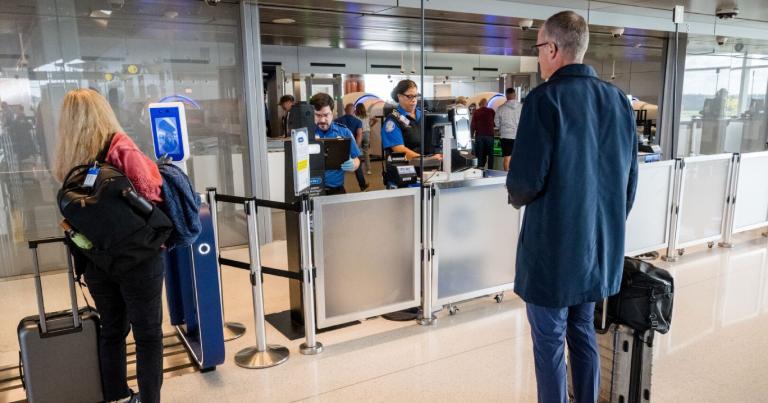
The unit pairs conversational AI with live airport data rather than a static wayfinding map. Passengers get real-time TSA wait times layered onto step-by-step directions, and can be handed off to a live human agent when the query gets complicated. Accessibility features include high-contrast displays, closed captioning, WCAG-compliant mapping and wheelchair-accessible positioning, which puts it ahead of many kiosk-based wayfinding tools on compliance out of the box.
Massport’s pitch is operational, not just cosmetic: Amelia is designed to absorb the routine wayfinding load during peak hours so terminal staff can be redeployed to the more complex service issues that actually need a person. That framing puts it in the same category as the agentic AI pilots running at CVG and Munich Airport, where the same argument, freeing staff for exceptions rather than replacing them, is being tested with a different technology stack.
Who this helps, and what to check before copying it
For an airport with high multilingual traffic and a terminal layout that generates repeat wayfinding questions, a 40-language, always-on concierge is a plausible fix for a specific cost line: the staffing hours currently spent on directions and gate queries rather than complaints or complex rebooking. It sits alongside the wider move toward live operational data feeding the passenger directly, the same logic behind SITA’s Border Flow Lane pushing pre-departure clearance data to travellers ahead of time, and the platform approach Montréal-Trudeau has taken with Veovo to centralise operational data across the terminal.
What is missing from the announcement, and what any airport considering this should ask Massport, Proto Hologram or Holomedia AI directly, is cost, contract length and whether the pilot’s TSA wait-time feed depends on a data-sharing arrangement specific to Boston Logan. Airports running their own TSA identity or screening integrations, such as the mobile driver’s licence rollout now live at Colorado airports, will want to know how portable that live-data feed actually is before assuming Amelia drops in cleanly elsewhere.
The takeaway: this is a pilot, not a proven fleet-wide deployment, so treat the “biggest airport” claim as a scale marker rather than a validated return. Airports with multilingual traffic and heavy staff load on basic wayfinding should ask Massport, Proto Hologram and Holomedia AI for the pilot’s actual usage data and cost before signing anything.