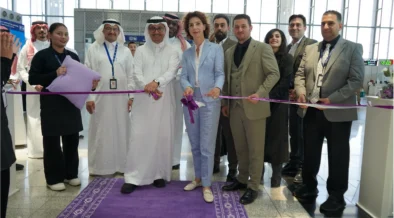
Lagardère Travel Retail has opened two new dining concepts at Prince Mohammad bin Abdulaziz International Airport in Madinah, taking the Lagardère Saudi Arabia restaurant count to 20 across three airports, as COO for MEA Asia Vincent Romet says the kingdom remains “a vital market” for the group. The additions are Marché, the company’s own international food hall format, and Sawa, a regional dining concept built for the Madinah passenger base, a similar regional dining expansion to Menzies Pearl Lounge’s recent growth in Egypt’s airport lounge network.
Marché sits in the airport’s international passenger environment, while Sawa is positioned as a distinctly regional offer alongside it. Neither opening carries a disclosed capital cost, and Lagardère has not given an opening-week trading figure, consistent with how the group has reported its earlier Saudi rollouts.
The openings sit inside a wider build-out. Lagardère now runs 20 restaurants across Riyadh, Dammam and Madinah, a portfolio it describes as a mix of its own concepts and regional or international partner brands run with local operational teams. The Madinah relationship with landlord and operator Tibah Airports dates to a 2023 duty free launch, which expanded into travel essentials and then, over the past year, into dining.
For a reader running concessions elsewhere, the sequencing is the useful part: duty free first, then essentials, then food and beverage, all under one landlord relationship rather than a fresh tender each time. That is a template worth comparing against how other operators structure entry, which is exactly the ground covered in Airport Business Magazine’s comparison of travel retail concession operators by scale and contract model.
Madinah’s own profile explains why Lagardère is investing here rather than treating it as a secondary market. The airport handles a large and consistent flow of pilgrim traffic alongside Saudi Arabia’s tourism diversification push, giving concessionaires a passenger base with less seasonal volatility than a typical leisure gateway. That is a different commercial case to the retail expansions this title has tracked elsewhere, such as Gebr. Heinemann’s 3,800 sq m retail extension at Berlin Brandenburg, which is built on scheduled leisure and business traffic rather than pilgrimage flow.
The move also lands inside a broader pattern of concession operators consolidating around fewer, deeper landlord relationships rather than chasing single-site wins, a pattern visible too in Menzies’ expansion of its Pearl Lounge network to 24 sites in Egypt. For operators bidding into Saudi Arabia’s airport privatisation and expansion programme, the practical takeaway is to treat the Tibah relationship as the benchmark: land a smaller category first, prove local operational delivery, then expand into higher-margin dining once the landlord has evidence the model works.
This story was first reported by Airport World.
Image: airport-world.com