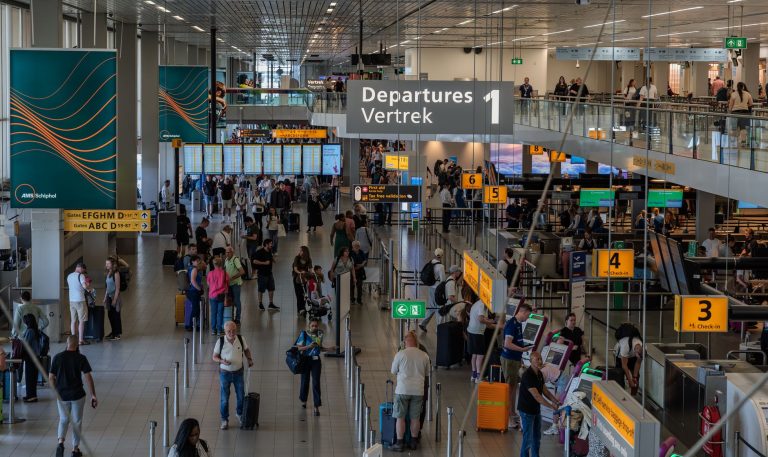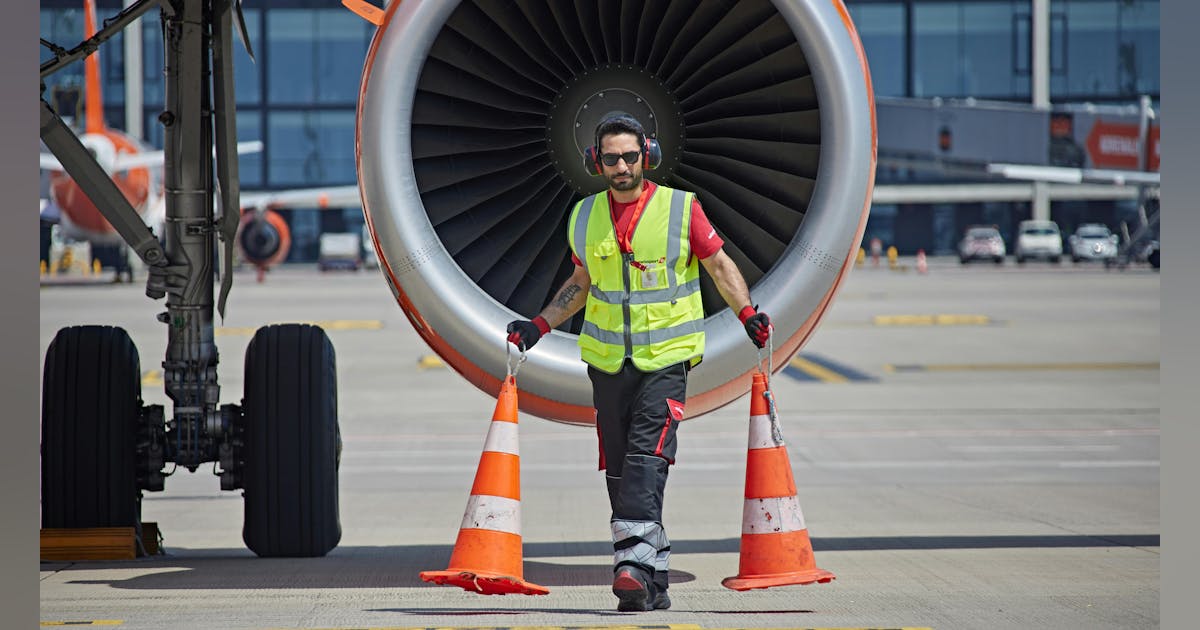
Aviapartner, Menzies Aviation and Swissport have challenged the Schiphol ground handling tender in court, arguing the process that would cut the number of handlers from six to three was flawed. Any airport moving from an open handling market to a regulated, concession-based model should treat this case as the test of how far that consolidation can be pushed before losing in court.
Aviapartner, Menzies Aviation and Swissport have challenged in The Hague court Amsterdam Airport Schiphol’s ground handling tender, which would reduce the number of handlers from six to three when dnata, KLM and Viggo take over. The tender was launched in December 2025 to award three concessions covering baggage handling and apron services, with the new arrangement currently scheduled to take effect on 28 March 2027 and airlines still free to choose among the three winners.
The District Court of The Hague heard the three companies’ objections on 2 September 2026. None of the three secured a provisional contract when Schiphol named dnata, KLM and Viggo as winners in June 2026, and a ruling is expected on 23 September 2026. Until then, the final contract awards are on hold, though Schiphol says it still expects the March 2027 transition date to hold.
The objections cover four separate points. Aviapartner is disputing the scoring of its own bid. All three challengers have raised KLM’s dual role as both an airline and a selected ground handler, questioned whether airlines were properly consulted during the process, and pressed Schiphol on past allegations involving dnata, which the airport says it investigated and found no grounds to exclude the company over. A fourth line of challenge asks whether Viggo has the staffing and equipment to run apron and baggage operations at Schiphol’s scale from day one, a resourcing question Schiphol says was tested as part of its operational feasibility scoring.
For other airports, the case is a preview of what happens when a handling market gets consolidated by design rather than by attrition. Schiphol’s stated rationale, that fewer handlers let it impose tighter requirements on safety, working conditions and shared use of ground support equipment, is the same logic behind capacity-driven consolidation elsewhere, and it sits alongside the wider wave of concession and system rebuilds tracked in the biggest airport capital programmes of 2026-27. Because baggage handling sits inside the disputed scope, airports reviewing their own equipment and integrator choices should also weigh the ground realities set out in the baggage handling system integrator comparison, since a concession reshuffle changes who specifies and pays for that kit. The dispute also echoes the trade-offs airports face when consolidating passenger-facing systems, a decision covered in the common use passenger processing system comparison: fewer vendors means tighter standards but higher dependency risk if one partner falls short.
Losing bidders lose revenue and jobs at Schiphol if the ruling stands; incumbents and airlines gain simplified contracting but inherit concentration risk if Viggo’s staffing questions prove real. Airports considering a similar cut from an open market to a small concession pool should budget legal contingency time into the transition schedule now, not after a court date is set, and should be ready to defend evaluation scoring and conflict-of-interest questions before a challenge is filed, not after.
The story was first reported by AviationPros.
Image: aviationpros.com