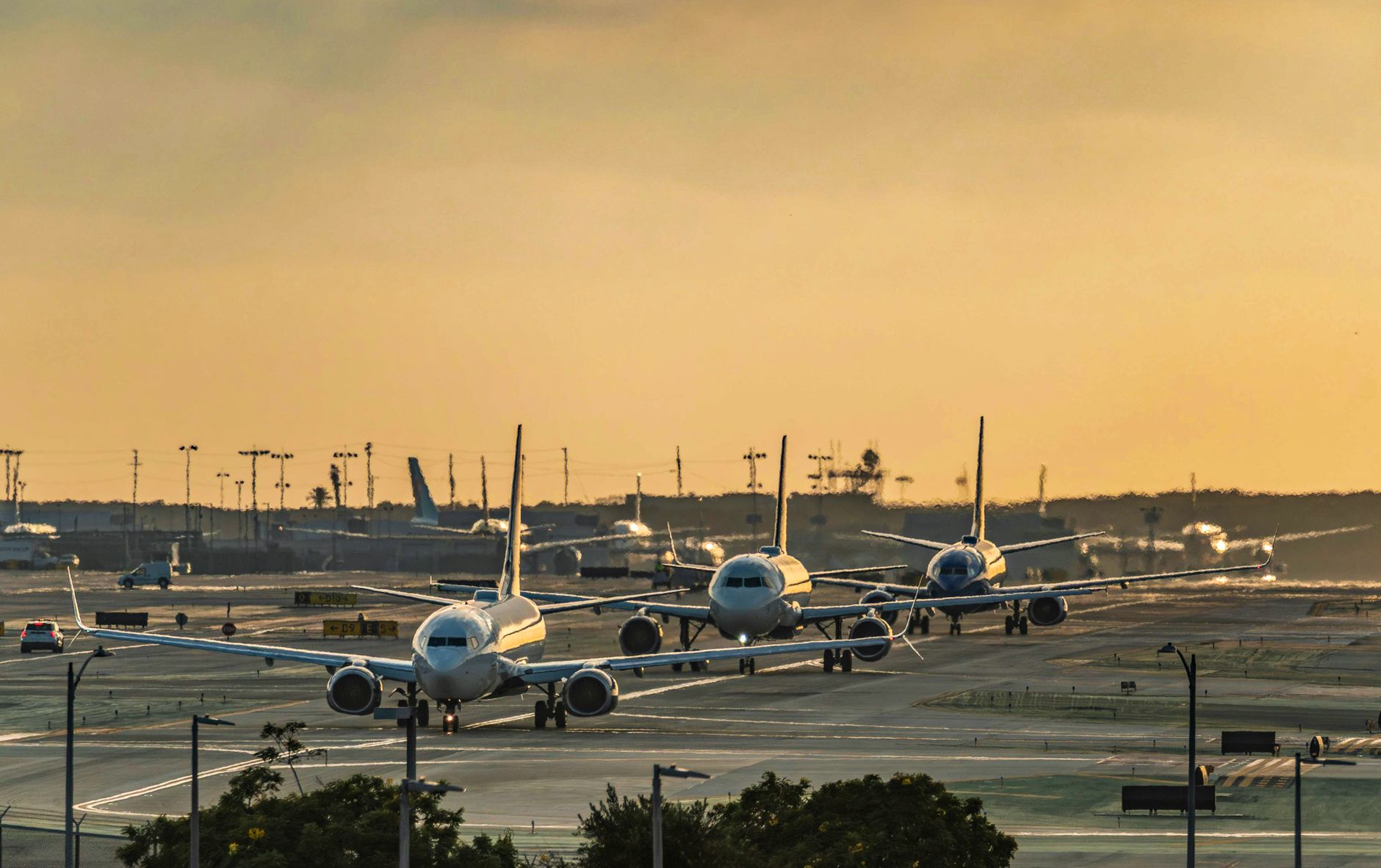
United Airlines has pushed back the launch of ten planned Midwest routes from Chicago O’Hare International Airport to late 2027, after the Federal Aviation Administration extended the airport’s daily operations cap through 30 October 2027. The FAA cap O’Hare operates under limits scheduled arrivals and departures to 2,708 movements a day between 6am and 11.59pm Central Time, with half-hour limits of 30 to 84 operations depending on the time of day and runway configuration.
The cap was first imposed after airlines filed for more than 3,080 daily flights on peak summer 2026 days, a 14.9% jump on the previous summer that the FAA judged unworkable given ongoing airfield construction. That order was due to lapse on 24 October 2026 but has now been extended a further year, covering the period the agency expects taxiway, gate and runway work under the ORDNext programme to continue. FAA infrastructure funding decisions elsewhere show the agency taking a similarly hands-on approach to capacity constrained by construction, a pattern also visible in this year’s largest airport capital programmes.
Ten regional markets pushed to 2027
The deferred routes connect O’Hare to smaller communities across the Midwest and nearby states, according to Simple Flying, which first reported the schedule changes.
| Destination | State |
|---|---|
| Bloomington-Normal | Illinois |
| Champaign-Urbana | Illinois |
| Kalamazoo | Michigan |
| Lansing | Michigan |
| Marquette | Michigan |
| La Crosse | Wisconsin |
| Central Wisconsin | Wisconsin |
| Tri-Cities | Tennessee |
| Erie | Pennsylvania |
| Rochester | Minnesota |
Source: Simple Flying, 19 September 2026, citing Cirium schedule data.
Those markets rely on connecting rather than local traffic, and a 50-seat regional jet carries far fewer passengers per movement than the leisure and western routes United has added instead. Under a fixed operations ceiling, that opportunity cost becomes visible in the schedule: according to the Cirium schedule data reported by Simple Flying, United has launched 12 new domestic O’Hare routes in 2026, including Santa Barbara, St George, Idaho Falls, Cody, Lancaster and Kearney, alongside Lynchburg, Clarksburg, Shreveport, Owensboro, Monterey and Santa Fe.
Upgauging instead of new movements
United has also cut its planned third-quarter daily O’Hare departures from roughly 780 to about 650, a reduction of 16.7%, according to the Cirium schedule data cited by Simple Flying, and is using larger aircraft on existing routes to carry more passengers per movement rather than adding frequencies. A single aircraft movement consumes the same scarce slot whether it carries 50 seats or 150, which makes upgauging the more efficient response to a hard cap, though it does little for communities that need frequency rather than capacity.
O’Hare is also American Airlines’ hub, and both carriers must plan within the same 2,708-movement ceiling while the FAA’s historical-schedule allocation shapes who keeps rights to peak-period slots once ORDNext construction eases. United’s mix of deferrals, new leisure spokes and upgauging, alongside its parallel work on the passenger side such as the app-based gate ordering trial at Newark, points to a carrier managing scarce capacity market by market rather than shrinking uniformly.
For airports facing their own construction-driven caps, the takeaway is procedural: confirm whether a schedule restriction has a hard expiry or is tied to a construction milestone, and expect airlines to protect historical slot rights on marginal routes even while deferring them, rather than surrendering the capacity outright.