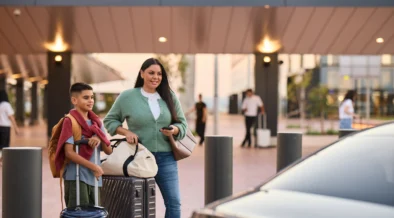
Western Sydney International Airport (WSI) has struck a partnership with Uber that hands the rideshare operator an exclusive pickup zone at the airport’s terminal, a deal that lands weeks before the airport takes its first commercial passengers. Uber will operate 10 kerbside pick-up bays located 100 metres from the terminal, positioning rideshare as a headline transport option from day one rather than as a later add-on.
Western Sydney International Airport and Uber announced the exclusive pickup zone arrangement on 26 September 2026, according to Airport World. The zone sits within the terminal precinct with dedicated signage and wayfinding, and it goes live alongside the airport’s first passenger flights on Sunday 25 October 2026.
WSI has already been operating as a cargo gateway, with freight services starting on 27 July 2026 ahead of the passenger launch. The airport is Australia’s first major international greenfield development in more than 50 years and runs on a 24-hour basis, which matters for ground transport planning: a curfew-free airport needs kerbside capacity and rideshare availability that match arrivals and departures around the clock, not just during a daytime peak.
WSI chief executive Simon Hickey framed the deal as one part of a wider ground access mix that also includes driving, public bus links, taxis, car hire, private transfer and on-site parking. “We know how convenient rideshare is for passengers, being able to order an Uber on demand, with transparent upfront costs and timings applied to your journey,” Hickey said, adding that driver interest from the local market had been strong ahead of launch.
For other airport operators building or reopening terminals, the exclusivity is the detail worth copying rather than the rideshare tie-up itself. An exclusive zone gives one operator predictable kerb space and lets the airport concentrate wayfinding and staffing around a single flow, rather than splitting capacity across multiple app-based operators competing for the same bays. Airports weighing similar arrangements should also watch how autonomous ground transport is starting to compete for the same kerb space, as Zoox’s robotaxi launch at Las Vegas Airport shows rivals already queuing to challenge incumbent rideshare deals.
The timing also sits inside a broader capacity story. ACI World‘s count of a record 9.8 billion passengers carried globally in 2025 underlines why greenfield capacity like WSI matters and why ground transport contracts get signed well before a single flight departs. Australian peers are moving on the same clock: Brisbane Airport’s new 12-lane passport hall shows another domestic operator racing to have passenger-facing infrastructure ready ahead of peak demand, and rail-linked alternatives such as LNR’s hourly Birmingham to Manchester Airport rail service from 2027 illustrate the range of ground access models operators are choosing between.
What is missing from the announcement is cost. Neither WSI nor Uber has disclosed the commercial terms of the concession, the length of the exclusivity, or how bay allocation will scale if demand exceeds 10 bays once the airport ramps toward its full traffic forecasts. Operators planning similar deals should ask their own rideshare partners for those numbers up front rather than assuming they will match another airport’s terms.
The practical takeaway: airports opening new terminals should lock in kerbside and ground transport partnerships before the first passenger flight, not after, and should press for the same commercial and capacity detail that WSI has yet to publish.
Image: airport-world.com