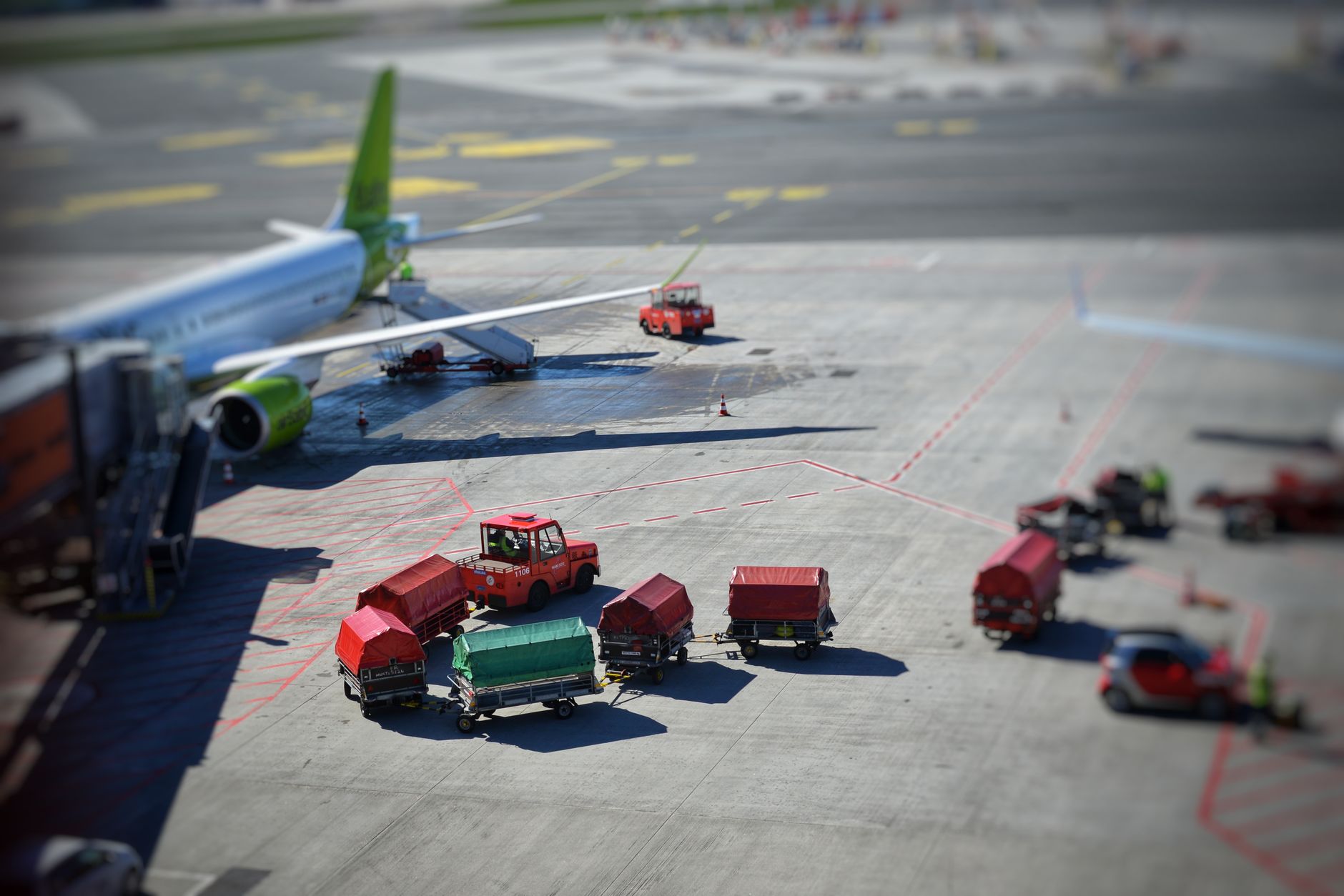
DOLL Airport Equipment says electric catering highloaders can now cost up to twice as much to buy as equivalent diesel models, and that charging infrastructure, not vehicle performance, is now the constraint on fleetwide electrification at airports. The German manufacturer’s findings come from pilot deployments at airports including Vienna, which it is using to assess energy consumption and grid requirements before customers commit to larger rollouts.
DOLL Airport Equipment, which specialises in aircraft catering highloaders, says charging infrastructure and operational planning are becoming the limiting factor as airports and ground handlers expand electric ground support equipment fleets. According to AviationPros, which first reported the comments, acquisition costs for electric highloaders can run as much as twice those of comparable diesel-powered models, depending on configuration.
At Vienna Airport, DOLL installed a dedicated charging station for a single electric highloader, with a power cable routed over the roof of a building to reach the vehicle. Bruno Brandt, DOLL’s head of customer operations management, says the arrangement worked for one vehicle but is not a template that scales as fleets grow.
“As the fleet grows, power demand and peak loads increase,” Brandt says. “This also raises the requirements for grid connections, cable routes, buildings, and permits.” The company says catering highloaders carry extra energy demands beyond propulsion, because they must keep refrigerated cargo compartments running throughout a shift and often travel further than apron tractors between catering facilities and the ramp.
For airport operators, the practical friction is ownership. Ground handlers, caterers and airlines typically own the vehicles, but it is the airport that controls the property, the grid connection and the permitting that electrification depends on. That split mirrors the coordination problem airports have already met with other electric airside fleets, from the Kalmar FB150 electric tow tractor to Textron’s TUG MX4, and it puts the planning burden on whoever owns the substation, not whoever signs the purchase order for the vehicle.
DOLL is not alone in the electric highloader and GSE market: TLD and Mallaghan both build electric variants aimed at the same ramp duty cycles, alongside larger players such as Kalmar and Textron GSE. What DOLL is adding to the conversation is cost data and a warning that bespoke, one-off charging installs like Vienna’s do not replicate cheaply across a fleet.
Brandt says DOLL’s pilots show electric highloader batteries can complete scheduled runs with refrigeration running continuously, with charging done overnight and during operational breaks, but that longer-term data is still needed to establish total cost of ownership. Airports weighing their own electricity capacity, including projects such as London Luton’s 10.42MWp solar farm, are effectively building the supply side of the same problem DOLL is describing on the demand side.
DOLL’s recommendation for operators is to map actual duty cycles, auxiliary power draw and available charging windows before committing to a phased electrification plan, and to train maintenance staff on high-voltage systems ahead of deployment rather than during it. “The vehicles are available,” Brandt says. “The task now is to integrate them effectively into airport operations.”
For airport commercial and facilities teams, the takeaway is to cost the grid connection, cabling and permitting alongside the vehicle price before signing off an electric highloader order, not after.